
Whale Pods
Material Practices | Adaptive Landscape | Dynamic Tsunami Coexistence
Uummannaq, Greenland/ 2026/ Workshop
Why this project matters?
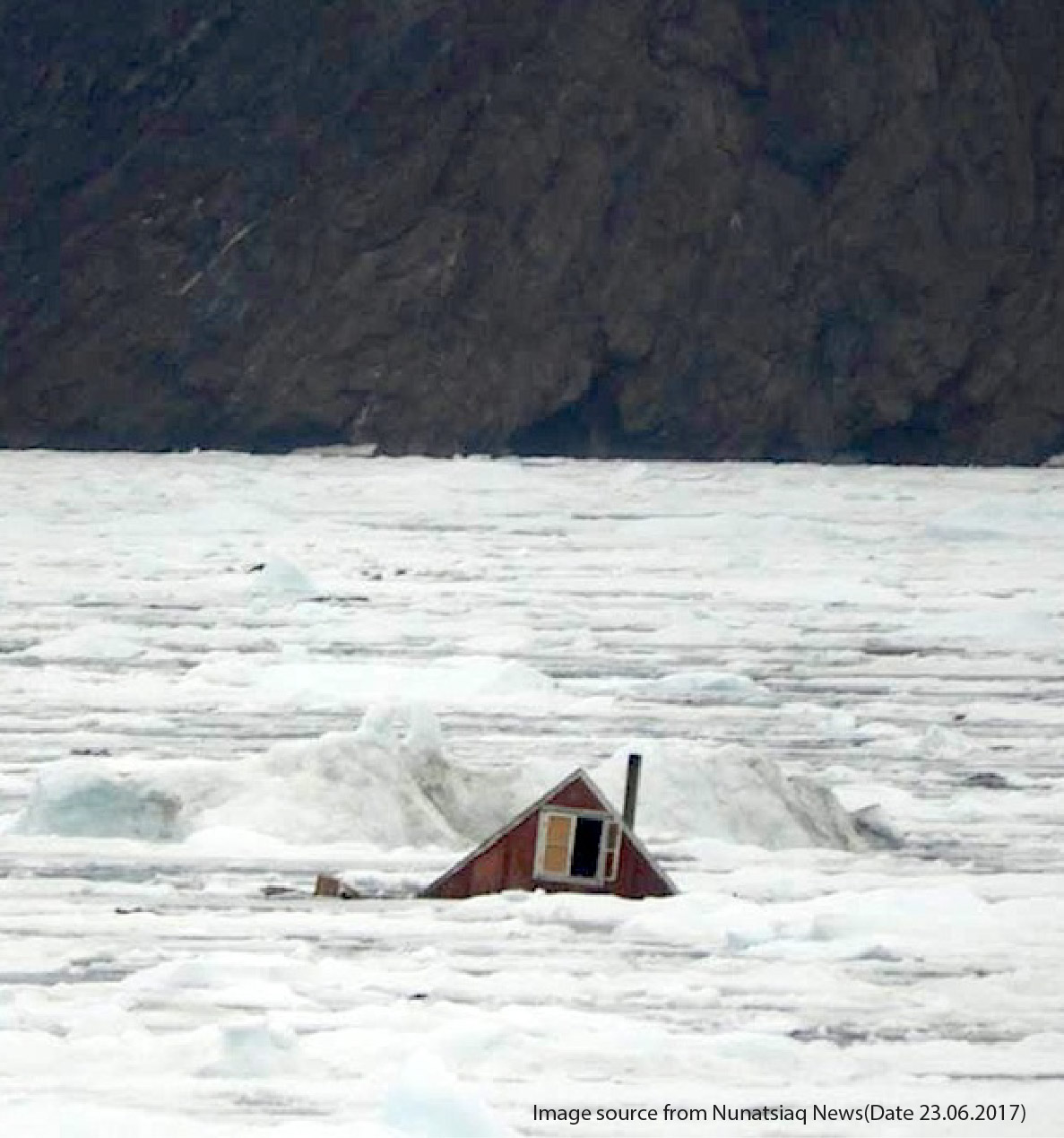
In West Greenland, climate-driven permafrost thaw has triggered destructive landslide-induced tsunamis across deep fjord systems. Conventional civil defense relies on static concrete seawalls—approaches that are physically impossible in extreme bathymetric depths and culturally fatal to Inuit communities whose entire subsistence depends on direct shoreline access. The Core Motivation & Proposed Framework
This project asks:
Can disaster adaptation emerge directly from existing daily living patterns, creating a dynamic system that aligns with polar seasonality while responding to sudden, extreme marine hazards? Grounded in social perspectives and vernacular "material practices," this research establishes an open, speculative design framework:
The Fisher's Milieu as a Pilot Catalyst:
Given the time constraints of the workshop, the investigation takes the predominant local group—the Inuit fisher—as a primary case study. By mapping their daily temporal routines and seasonal trajectories across open water and sea ice, the project generates spatial interventions that embody true social adaptation rather than technical imposition.
Multi-Scalar Mapping for Dynamic Coexistence:
The framework demonstrates that when cross-sectional, longitudinal, macro-territorial, and micro-material mappings are overlaid, the resulting intersections reveal critical points of equilibrium. Expanding this method across diverse local milieus is the central objective of this framework, reframing Arctic hazard mitigation from rigid resistance to culturally anchored, dynamic coexistence.


